
Reproductive rights: an unfinished project and an ecological imperative
Reproductive-Rights-Discussion-Paper-22Sept2026.pdf
By Jane O’Sullivan and Sandra Kanck
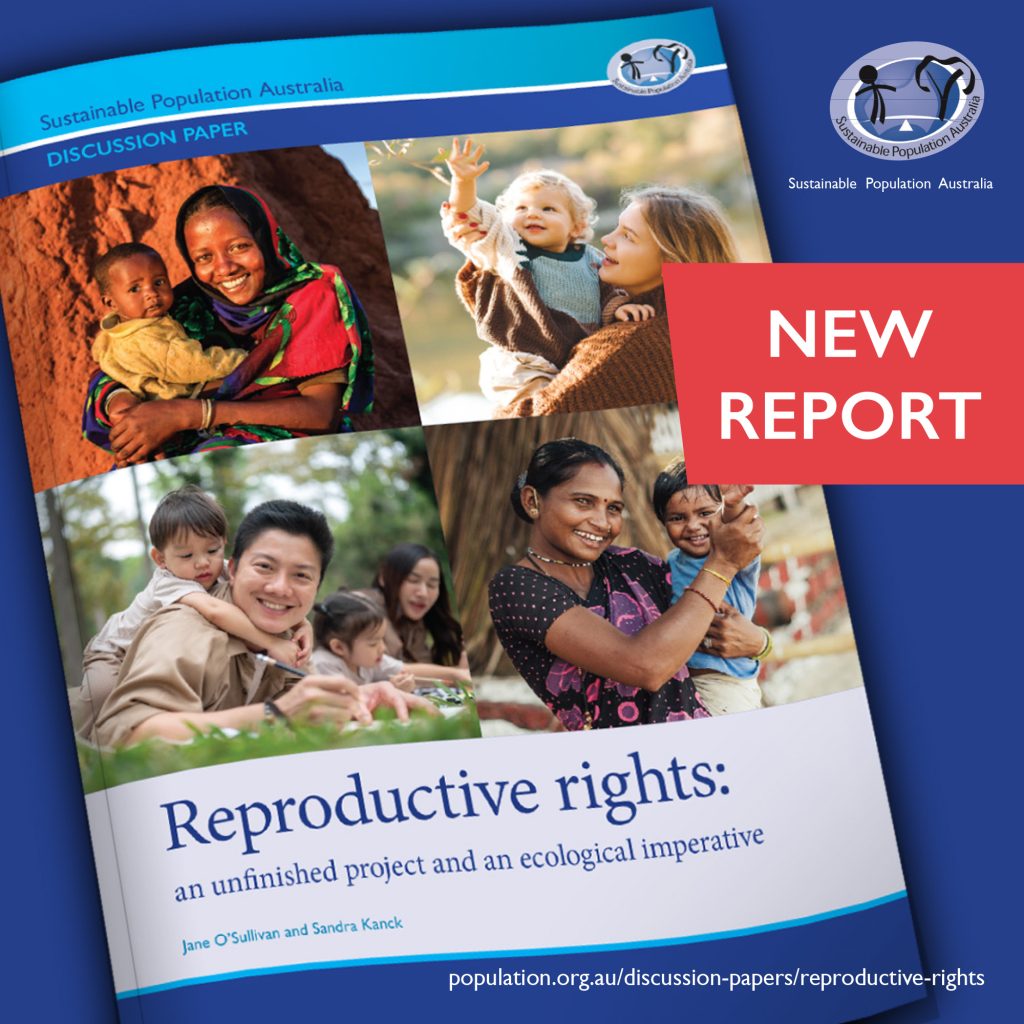
Since the 1960s, modern contraception has brought a revolutionary advance in women’s bodily autonomy and their freedom to shape their own lives.
Simultaneously, it was a powerful tool for reducing poverty and enabling economic development in low-income countries.
Those countries that embraced this synergy through well-executed voluntary family planning campaigns have experienced steady economic betterment. Those that did not, and retain high rates of population growth, have floundered.
However, such family planning programs were deprioritised and defunded in the 1990s, due to a campaign to discredit population stabilisation efforts. Fertility declines stalled and population growth in low-income countries has exceeded United Nations projections.
While the UN has projected that global population will peak at around 10.2 billion later this century, this depends on all the remaining high-fertility countries experiencing a much more rapid fall in fertility than they have achieved so far.
In these countries, high levels of religiosity and patriarchy make it harder to shift cultural norms to accept small families and women’s empowerment. Renewed efforts are needed to promote small family norms and debunk harmful myths that make people fear contraception.
Without a renewed commitment to support family planning, world population will likely exceed the UN’s projection, further jeopardising food security, climate change mitigation and ecological sustainability.
Download the full paper below:
Reproductive-Rights-Discussion-Paper-22Sept2026.pdf
SPA’s discussion paper series can be explored HERE.
Suport the work of Sustainable Population Australia. Find out more HERE.