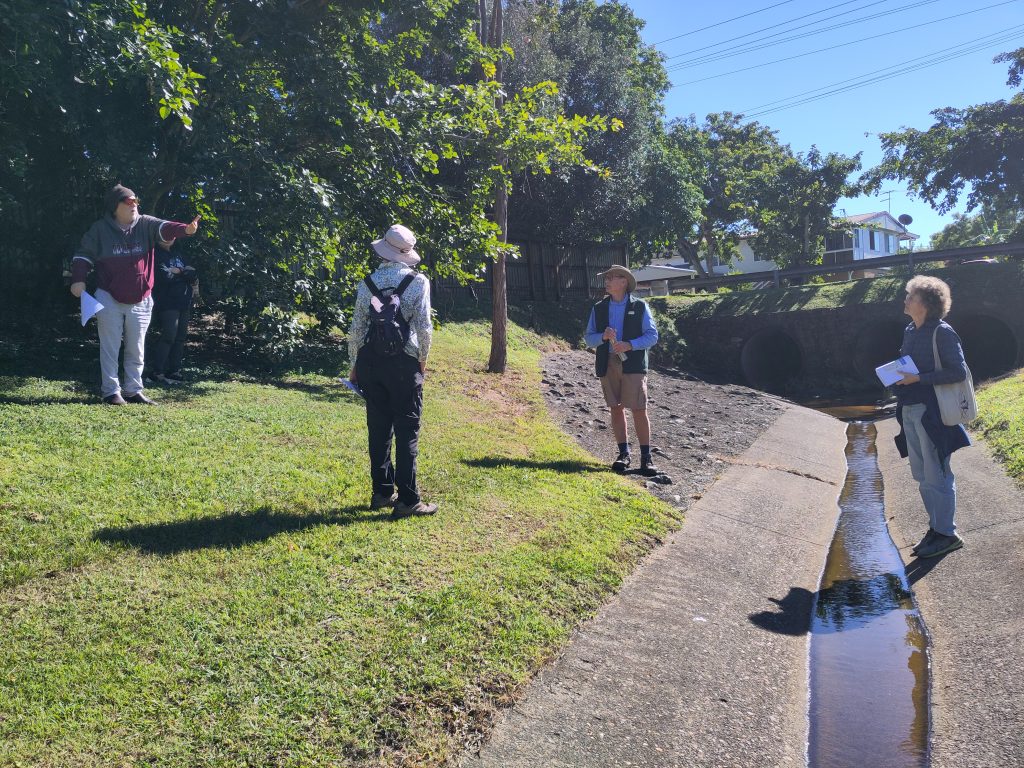
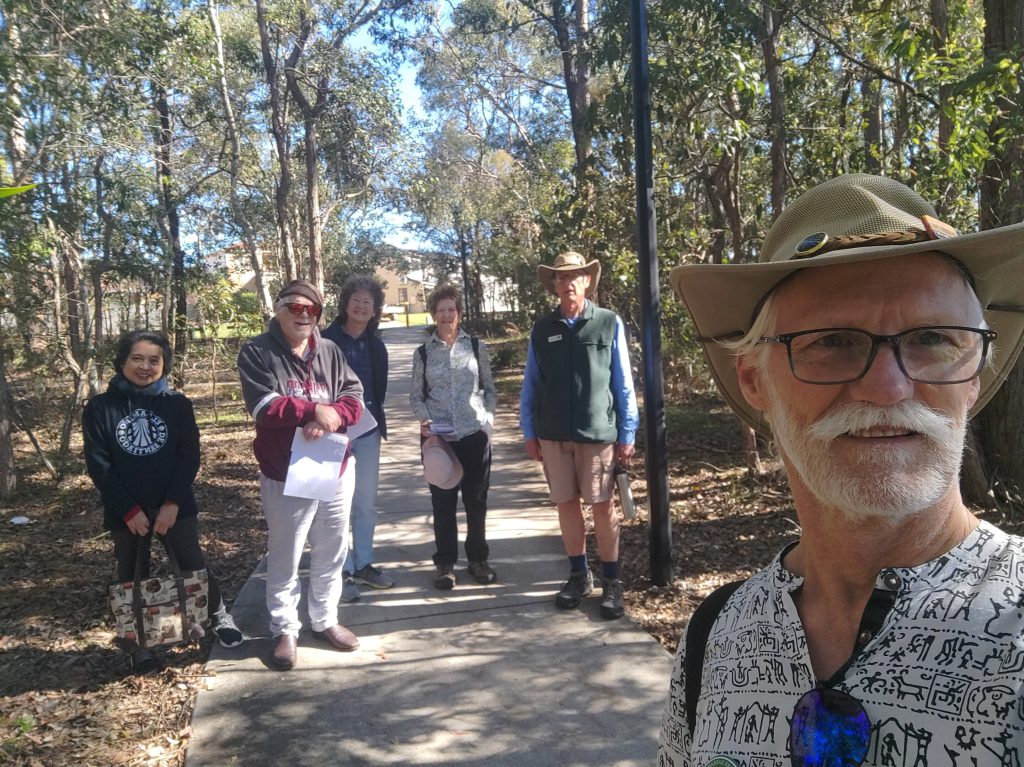
Waterways Visioning Tour
A Sustainable Population Australia Event
Peaks to Points Festival
https://www.peakstopoints.com.au/
Oxley Creek Catchment Association
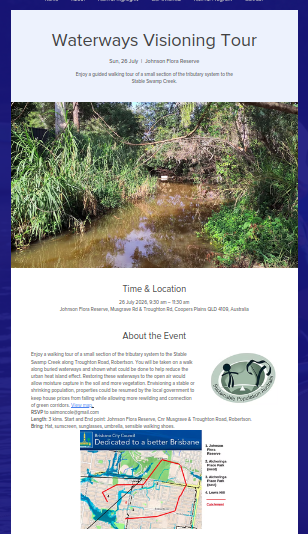
On Sunday the 26th of July, SPA Queensland Secretary, Simon Cole, led a guided walking tour along buried waterways in his neighbou neighbourhood, Coopers Plains. The event, part of the local Oxley Creek Catchment Association’s biennial Peaks to Points Festival, attracted a small group interested in the renaturalization of waterways as a climate warming adaptation to the urban heat island effect.
Stable Swamp Creek is a tributary to Oxley Creek that drains into the Brisbane River. Much of it has been buried under roads, houses and yes, even parks. Huge concrete stormwater drains – a common water management method in urban areas – are designed to remove ‘excess’ water as fast as possible.
“The attractions of concrete are obvious: it is simple, predictable, and moves water away quickly. However, hard‑edged channels reduce habitat and ecological function (CWEEP, n.d.; ACT Government 2024b), disconnecting the creek from its floodplain and surrounding green space (ACT Government 2024b; Cunningham 2017). They also deliver high sediment and nutrient loads downstream and concentrate flood peaks rather than allowing flows to be slowed and spread (ACT Government 2024b; Díaz‑Redondo et al. 2021; NCEconomics 2019). Renaturalisation, often loosely conflated with rewilding, is sometimes mischaracterised as simply “letting nature take over” or, at the other extreme, reduced to decorative landscaping. In reality, urban renaturalisation is usually a hybrid, nature-based solution, that is carefully engineered, with the explicit aim of reconnecting built spaces with their natural geographic setting (Pech 2016). (Declan Tennent, Conservation Council ACT Region Volunteer, Jul 2, 2026 | Healthy Waterways, Latest News, Nature and waterways)”
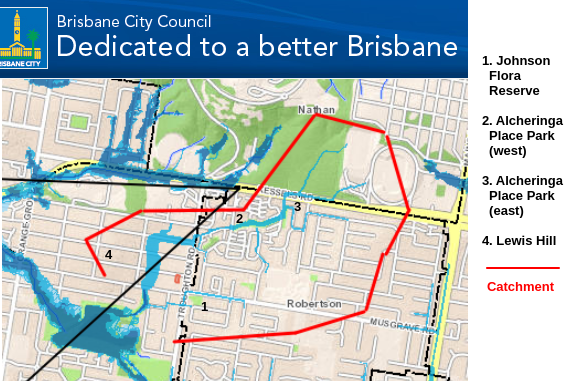
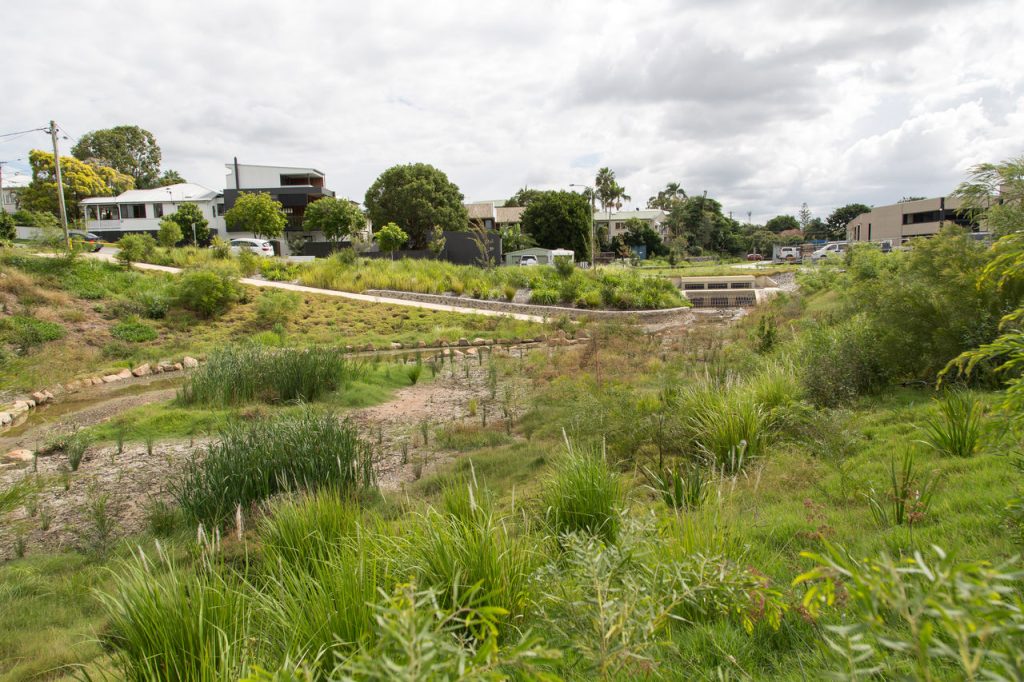
Renaturalising waterways allows water to be retained as much as possible such that vegetation and wildlife can flourish and a cooler micro climate created. This is particularly valuable at tributaries where, if the water is retained, the flow can be reduced downstream. If these actions are replicated across the city, the cumulative effect can mitigate rising urban temperatures. The tour focussed on the benefits of a shrinking population. Opportunities to restore these streams to the open air can be costly, but no more so than the cost of urban sprawl, which of course also creates more maintenance work. Local Council could protect falling property prices by buying back land and deteriorating housing at key locations. The Brisbane City Council has been obliged to do this after major floods, turning whole blocks into parkland.
The tour ended at Beryl Roberts Park, where Staple Swamp Creek is leveed into a water catchment and forest area, populated by flying foxes and water dragons.
https://www.peakstopoints.com.au/event-details/waterways-visioning-tour
https://conservationcouncil.org.au/blog/2026/07/02/the-case-for-renaturalisation-yarralumla-creek/